LinkedIn Message Reply Rate: 2026 Benchmarks and How to Improve It
The average LinkedIn outreach reply rate sits between 5 and 15 percent. Here are the real 2026 benchmarks, the levers that actually move replies, and why the account sending your messages quietly caps the whole number.
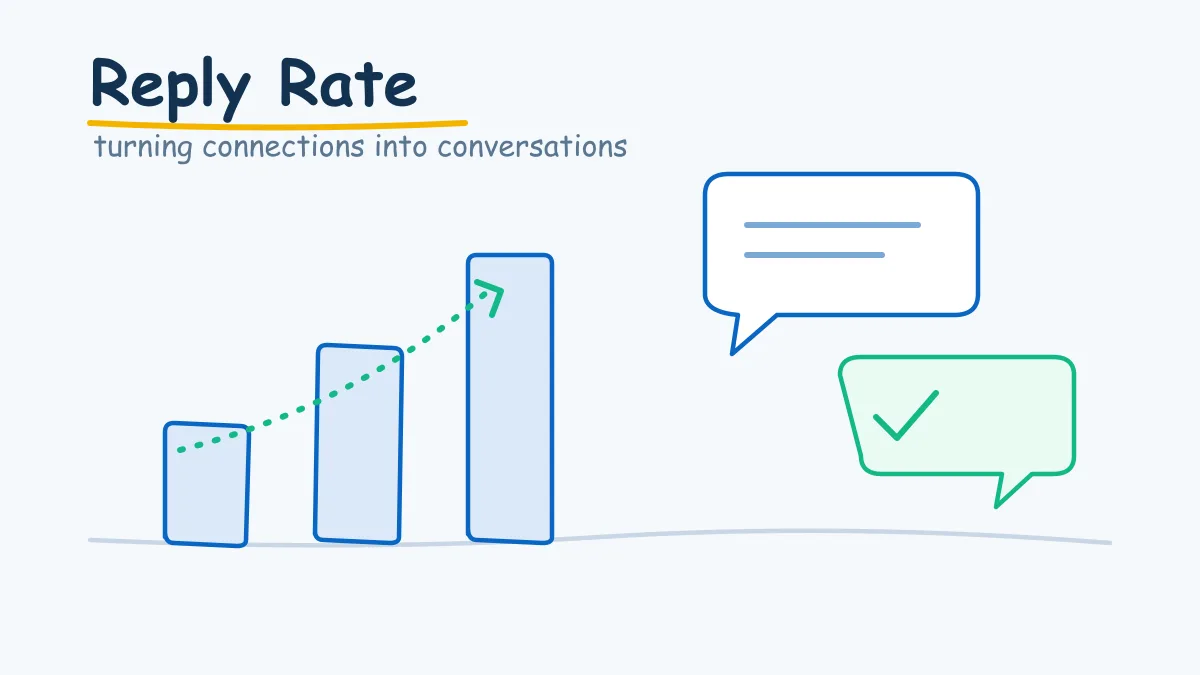
Once a prospect accepts your connection request, the next number that decides your pipeline is the reply rate: the percentage of people who actually respond to the message you send them. Acceptance gets them into your network. Replies are where conversations, meetings, and deals begin. Yet most teams track reply rate loosely, if at all, and then wonder why a healthy-looking connection funnel produces so few conversations.
This guide fixes that. We will cover the honest 2026 benchmarks, the levers that genuinely move replies, and one factor almost every team overlooks: the trust and health of the account doing the sending. If you have already tightened your connection acceptance rate, reply rate is the very next lever worth obsessing over.
What Is a Good LinkedIn Reply Rate?
Let us start with numbers you can trust, not the inflated figures in aggressive sales decks.
Across most B2B outreach, LinkedIn message reply rates land between roughly 5 and 15 percent for cold, connected prospects. Generic templated messages blasted at a loose audience tend to sit at the bottom of that band, around 5 to 8 percent. Well-targeted, personalised outreach to a tight ideal customer profile routinely reaches 15 to 25 percent, and the best-run campaigns with warm angles and strong relevance can push above 30 percent.
A simple way to read your own number:
- Below 5 percent: something is broken. Usually weak targeting, a message that reads as a pitch, or an overloaded sending account.
- 5 to 10 percent: roughly average. You are getting replies, but you are leaving a lot of conversations unstarted.
- 10 to 20 percent: solid. This is the band a disciplined, personalised campaign should live in.
- Above 20 percent: strong. This comes from precise targeting, a genuinely relevant opener, and a trusted account, all working together.
The gap between a 5 percent campaign and a 20 percent one is rarely luck. It comes down to a handful of specific things.
Why Reply Rate Compounds
Before the how, look at the math, because reply rate multiplies everything downstream.
Say 200 people accept your connection each month. At a 5 percent reply rate, that is 10 conversations. At 15 percent, it is 30. You did not add a single new connection, yet you tripled the number of live conversations, and every stage below (meetings booked, opportunities, closed deals) scales with it. A ten-point improvement in reply rate does more for pipeline than almost any other change you can make to a campaign.
That is why reply rate deserves the same attention as acceptance rate. Together they form the two hinges your whole funnel swings on. If you are building a repeatable outbound motion, this fits into the broader picture we cover in our LinkedIn lead generation strategy guide.
Lever 1: Message the Right People
The biggest driver of replies is relevance, and relevance starts before you type a word. If your list is loose, no amount of clever copy will save your reply rate, because most recipients simply do not care about what you sell.
Practical steps:
- Build from precise filters (role, industry, company size, and a real trigger) rather than broad titles.
- Prioritise people with a reason to hear from you now: a recent role change, a hiring signal, a post they wrote, a shared group.
- Cut anyone who does not clearly fit before you message them. Off-target sends do not just fail to reply, they train you to accept a low number as normal.
Tighter targeting lifts reply rate the same way it lifts acceptance, and it makes every reply you do get more valuable.
Lever 2: Write an Opener That Earns a Reply
Your first message is not a pitch, it is an invitation to respond. The teams with the highest reply rates treat the opener as a question worth answering, not a paragraph worth ignoring.
- Keep it short. Two or three sentences beats a wall of text every time.
- Open with them, not you. Reference something specific and real before you say a word about your product.
- End with one low-friction question. A single clear ask gets more replies than a menu of options or a hard pitch.
- Do not sell in message one. The goal of the first message is a reply, not a meeting.
If you want proven starting points, we keep a running set of connection request and outreach message templates you can adapt, and our guide to mastering LinkedIn cold outreach breaks the message structure down further.
Lever 3: Follow Up (Without Being Annoying)
A large share of replies never come from the first message. They come from a well-timed second or third touch. Most teams send one message, get silence, and move on, leaving the majority of their potential replies on the table.
- Plan two to three follow-ups spaced several days apart, each adding a new angle rather than repeating “just bumping this.”
- Change the value, not the volume. A useful resource, a relevant case, or a genuinely different question earns more replies than a nudge.
- Know when to stop. After three or four touches with no response, move on and protect the relationship for later.
Timing matters here too. Sending when your prospects are actually active lifts both open and reply rates, which is why it is worth reading our breakdown of the best time to send LinkedIn messages.
Lever 4: The Account Doing the Sending
Here is the lever almost nobody measures, and it quietly caps everyone’s reply rate. Targeting, copy, and follow-up all assume your messages actually land in the prospect’s primary inbox with full visibility. That assumption breaks when the sending account is new, thin, or overloaded.
Two things happen under the surface:
First, account trust. A message from a bare, unverified profile with a stock photo and no history reads as a bot, and people do not reply to bots. The same words coming from an established, ID-verified identity that looks like a real professional get read and answered far more often. This is why ID-verified LinkedIn accounts tend to out-reply freshly created ones on the exact same script.
Second, capacity and deliverability. LinkedIn caps how much one account can safely send, and pushing a single profile past those limits (the full picture is in our post on LinkedIn connection request limits) gets your activity throttled or your account restricted. A throttled account does not just send fewer messages, it sends them with less weight, and your reply rate falls for reasons that have nothing to do with your copy. The fix is not to grind one account harder. It is to spread the same volume across multiple trusted identities, each sending at a calm, human pace.
This is exactly the problem AIA avatars are built to solve. Instead of stretching one profile until LinkedIn starts filtering it, you run a fleet of pre-warmed, verifiable identities, each staying comfortably inside safe limits, so your reply rate reflects your message and targeting rather than an account fighting a throttle. When you are serious about volume, the account layer is the ceiling on everything above it, and it is worth understanding why purpose-built avatars beat a single stretched profile before you scale.
A Simple Reply-Rate Playbook
- Measure first. Track messages sent versus replies received every week so you have a real baseline instead of a feeling.
- Tighten targeting. Cut everyone who lacks a clear reason to reply. This usually moves the number most.
- Rewrite the opener. Short, about them, one low-friction question, no pitch.
- Add follow-ups. Two or three spaced touches, each with fresh value.
- Right-size the account layer. Keep each identity inside safe limits and add identities to grow volume, rather than overloading one account. Pre-warmed, ID-verified avatars let you scale messages without sacrificing replies.
Fix any one of these and a struggling campaign usually climbs into the average band. Fix all of them together and you push past 20 percent and keep it there.
The Bottom Line
Your LinkedIn reply rate is not random, and it is not only a copywriting problem. It is the combined output of who you message, how your opener reads, whether you follow up, and (most overlooked) the trust and capacity of the account sending. Teams stall near 5 to 8 percent because they polish the first three and ignore the fourth. Get all four right and a 15 to 20 percent reply rate stops being a lucky month and becomes your baseline.
Build the Account Layer Your Reply Rate Depends On
The sharpest message in the world cannot rescue a weak or throttled account. Run pre-warmed, ID-verifiable AIA avatars built to send real volume at a safe, human pace, each ready to attach to your outreach tool and its own proxy, backed by a 48 hour replacement SLA and volume discounts as your fleet grows. Start your order at app.getaia.io, or message the AIA team on WhatsApp if you want help sizing a fleet to your pipeline target first.